It is 2050. Use the materials and medium (or media) of your choice to create one object that belongs to this future world and animates a rich tension, conflict, problem, or possibility about the status of climate change 30 years into the future. The idea is that you should not create an entire world or detailed narrative. Rather, your object should be evocative of that future world, its ways of life, and forms of action within it. Your object might suggest some of the historical events that have happened between 2020 and 2050. As you create your object, review and draw on the United Nations Intergovernmental Panel on Climate Change’s Summary for Policymakers (documents here and here), which describes the expected impacts of climate change between 2030 and 2052. Along with your object, you should turn in a one-page, single-spaced artist statement that discusses your key concepts and themes. Feel free to use materials from clay to code to create your object. You can also draw on the myriad and freely accessible 3D printers at the Media Arts, Data, and Design Center.
In the Summer of 2050, the UChicago class of 2054 received a letter from the Dean of Students. This letter was met with outrage and discourse in many University groups. (Based off Dean Ellison’s letter on free speech from 2016.)
A blueish apple suggests the unknown indirect effects that follow from certain drastic geoengineering approaches. Methods like BECCS or ocean alkalinization, as considered in the Summary for Policymakers, could cause dire ‘unforeseen’ harm on ecological systems. Here, the apple’s blueish tint suggests a disrupted future ecosystem (for example via byproducts of geoengineering methods or compensatory fertilizers) — one that may be engineered to produce fruit ‘safe’ for humans…and indirectly, toxins for our fellow beings and for an ecosystem of which we are a part. Of course, alternative methods are listed too — and plenty are not listed — but the complexity of ecosystems (and our inability to fully understand/ manage/ substitute/ compensate for the harm we cause) suggests that with a non-anthropocentric lens towards climate change, we may better avoid choosing a band-aid ‘solution,’ or a medicine that causes more injury than it relieves.
I wanted to create an object that represents the hypothetical subculture of the future. I made a shirt that plays on the 1984 “Why cheap art? manifesto”, changing the word art to the word dirt. The idea is that in a climate change future, mainstream and privileged society will seek less and less contact with nature out of survival and the natural world will be taboo and less desirable. So, subculture will arise that will break down the human/nature binary and reclaim nature imagery. I imagine this shirt as something that would signify this sociopolitical position.
For my object I made a wall paper sampler. The wall paper is laced with technology that filters CO2 out of the air and oxygen back into it, in an attempt to make our homes and environments more inhabitable as we lose oxygen concentrations.
The object I’ve made is an electronic flyer distributed by members of CN International, the transnational political party that formed to promote radical policy changes for the cause of carbon-negative production models. By 2050, touring (due to its high carbon footprint) has become so unfashionable for musicians and their branding, to the point that it is unprofitable for mainstream musicians to openly continue to tour: they face the brunt of public backlash and the loss of supporters and sales. Performing artists who do openly continue touring, though, have begun to garner niche right-wing or otherwise anti-environmentalist followings. This flyer provides details for a few upcoming US concerts and music festivals that CN International has organized protests.
For my object, I added several elements to the Adidas Stan Smith to adapt to rising sea levels and increasing temperatures. Replacing classic shoelaces with elastics gives the shoe a tighter fit to keep water out and hotter temperatures will peel the leather shell of the shoe to slowly reveal a hidden design like a scratch off ticket. The shoe is meant to show Adidas’ need to redesign their shoes to adapt to a climate change society which is unusual for the brand, and most shoe brands, who has consistently brought back original designs from many decades ago to cherish history and hype up the sneaker community.
What is depicted in the two images—figs. 1 and 2—is an alternate climate report from the year 2052.
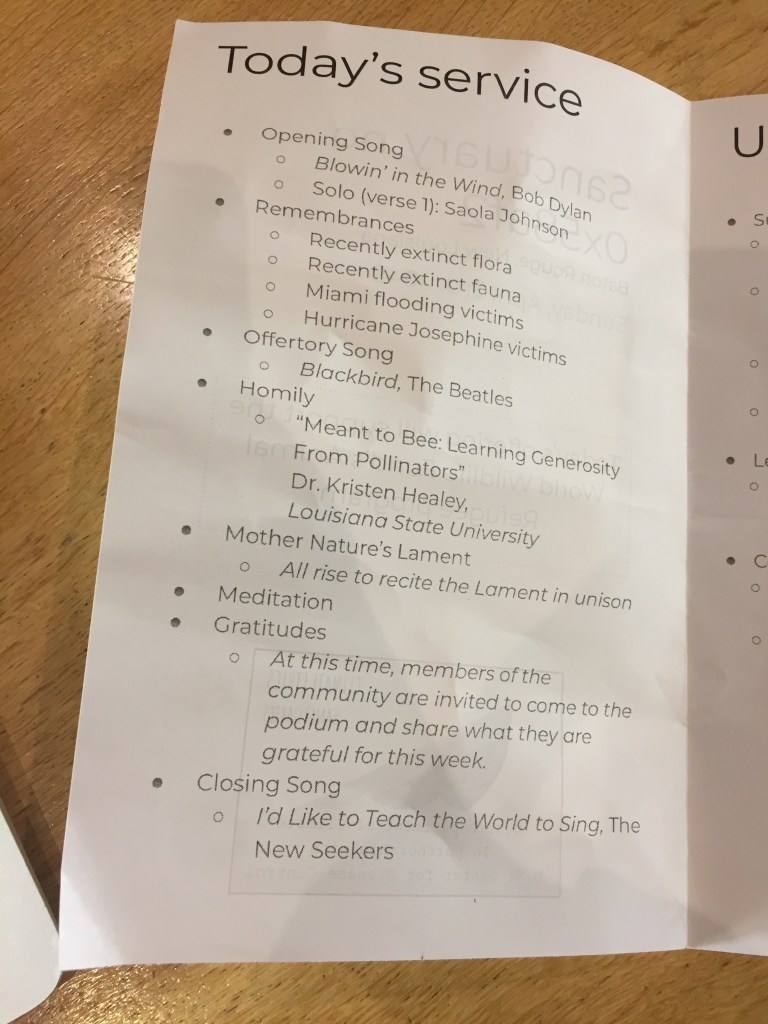
Here’s my object! It’s a paper handout from a “climate center” or “sanctuary” that I’ve imagined as a climate-oriented, state-sponsored spin-off of organized religion. The handout is supposed to be crumpled and hanging out in the bottom of someone’s purse or desk in 2050 (the program is from April 2049). Please forgive the fact that it’s only semi-crumpled–hopefully by class on Monday the bottom of my backpack will do its damage and make it look as worn as I I’m hoping it will look.
My object envisions a 2050 in which daily diets are no longer comprised of classic food groups, but agar agar algae. I chose to conceptualize the food of the future through the vehicle of Lunchables.
Processed with VSCO with c1 preset
Processed with VSCO with c1 preset
For my object I knit a surgical mask Diseases & air quality get worse and people get increasingly creative with their designs; in coastal areas where there are rising deaths, people start putting pins (mine is paper clips) in their masks to represent loved ones that they have lost.
As climate change is expected to produce lower yields of crops, particularly maize and grains, food scarcity will become a key problem in 2050. Compiled with the fact that demand for food is predicted to increase by 60%, new agriculture technology will be needed just to meet food demand. One solution to this is “Foodscrapers”, skyscrapers of stacked greenhouses means to produce crops within an urban environment. This will change how people in urban environments get their food, but also how farming jobs and working-class jobs will change in response to global warming.
As the impacts of climate change continue to destroy ocean ecosystems through 2050 and beyond, fewer species of sea life will be able to withstand the higher temperatures and higher acidity worldwide. Except jellyfish. Resilient to the warm, acidic oceans of 2050, jellyfish populations are booming. But more common than Jellyfish in the ocean are plastic bags, which continue to end up in the ocean even decades after they’re banned worldwide. Looking at the water, it can be hard to tell if you’re looking at a jellyfish or just a drifting plastic bag.
I created an urban dictionary definition of “Glenglish” to relate a climate changed future to linguistics, globalization, neoliberalism, and public domains.
In 2050, coral reefs around the world will have disappeared. Children will not get to experience the wonder and amazement of marine biodiversity first hand; instead, you can purchase a pool product that replicates a coral reef in your own pool. The projector uses 3D mapping technology to project corals and other marine animals throughout the pool, allowing you to swim alongside extinct fish, turtles, dugongs, and more. The data and visualization of projected species are sourced primarily from data collected in the next 30 years as we try to catalogue and preserve biodiversity in what is currently left of coral reefs.
“A group afraid of outside surveillance calls themselves the ‘Reckies,’ a nickname for ‘reclaim.’ Many of them began as individuals who had health problems from the pollution that were not recognized or solved by the healthcare system. They reject the dominant forms of monitoring from outside sources, and advocate a grassroots method of self-monitoring using pigments that they claim inform them of their bodily states. Instead of the wearables of the mainstream culture, Reckies use reclaimed trash from the first two decades of the 21st century to avoid organizations controlling the products that they buy. This is why they are sometimes called ‘Reekies.'”
My object was a billboard of the future that converts CO2 and H2 in the air into an electrical conductor and water, through a newly discovered process (as of late 2019). The LED sign on the buildboard would be using its own creation as a power source, as well as creating other necessary resources. The idea was to repurpose something in a way that might not exactly be seen, and that would make it useful in more ways than one, as it already has valuable real estate. While change and progress are being made, the changes are not as visible and futuristic as may be anticipated, but they are impactful, leading to a new goal of reaching a state of being carbon negative, rather than just carbon neutral.
My object that is representative of climate change and the transforming world in 2050 is an Instagram advertisement for a skincare and makeup line developed specifically to deal with the challenges of UV rays, which according to WHO will lead to an upward trend in skin cancer. I decided to contextualize it through the inclusion of a sponsored social media post so that it might speak to present and future cultural trends. I can foresee a future in which instead of promoting awareness of one’s overconsumption in order to stir the necessary shift in how humans use Earth’s resources, influencers market wellness and continued consumption without radical lifestyle changes
With the general decrease in air quality that has occurred by the year 2050, communities have begun to cluster around forests and other wooded areas with more breathable air. After an initial outbreak of violence for the best living spaces to have access to better oxygen, some of these communities have developed a nomadic lifestyle in which the community is divided into numbered pods that move through different “leaf levels”–from the center of the forest to its outskirts–and use this clock to synchronize and keep track of moving seasons so that all have access on a rotational basis.
Here are my objects: nutrition labels on a box of pasta and a carton of half-and-half from the year 2050. The FDA has mandated that food manufacturers include the per-serving greenhouse gas emissions on food packaging, along with the % daily value based on recommended daily greenhouse gas emissions for a single person.
As a species, we have learned ways to change our environment to our advantage but as climate change drives the environment to extremes, humans will continue to subject nature to our whims. Take the umbrella, an object that most people have used or seen, and picture that in 2050. Will an object that has not changed for millennia suddenly have to adapt to climate change as well? I imagine one possible design for the future of the umbrella and hope it makes you wonder what will happen to simple objects that change our immediate environment.
In 2020 textile production is the world’s second most polluting industry after the oil industry. In 2040 a high global tax was placed on all non-carbon-neutral textile production in an effort to decrease the textile industry’s carbon footprint. In 2050, as new textile production decreases and personal wear lifetime increases, low income households no longer have the option to buy affordable, new clothing or good condition second-hand clothing. Many people are left to wear stained, ripped, and out of style clothing that they buy or already have. Some people who do not feel comfortable wearing clothing in this condition have gotten creative with refashioning their clothing to hide these imperfections. This shirt was made by combining two shirts to hide the very noticeable, unremovable stain on the front of each. The woven style of the shirt is in fashion right now because it doesn’t take much sewing skill to produce and the weaving pattern is easily altered to hide future stains, further lengthening the lifetime of the shirt.
My object is a clothing patch from a demonstration in 2051, protesting mid-21st-century climate mitigation policies that have taken afforestation to an unsustainable extreme.
For my object I filled two plastic bottles up with exhaust fumes. I started by thinking of some of the changes in consumer products during my lifetime, especially single-use ones, and came to the rather sad realization that not much has changed in the past couple of decades in terms of materials being used to make the most popular and commonly used products. However, I also realized that things that were visibly unappealing, such as black smoke from a car, or smog in general, were tackled with some urgency, while things like plastic, which we lose sight of (and most likely ends up hidden away in the ocean) continue to increase. I thought about ‘clean emissions’, and what the clean really meant in this case, whether it was more of a visual and aesthetic judgement or a scientific fact, and whether the invisibility of our modern day emissions have allowed for more. And while I can see a future where we are able to cut down emissions and the use of plastics, I could equally envision a future where these objects, and the indiscernible air it contains continue because they do not register aesthetically as ‘pollutants’




 Climate Change in Media and Design
You must be logged in to post a comment.